If you’re traveling internationally, any savvy traveler will want to know how to avoid foreign transaction fees. Traveling abroad is exciting – new cultures, new food, new experiences – but one thing you don’t want to bring home is an inflated credit card bill, especially in this economy.
Many banks tack on foreign transaction fees every time you swipe your card overseas, often adding 2-3% to every purchase. That may not sound like much at first, but over the course of a trip, those little charges can quickly snowball into hundreds of extra dollars.
The good news? It’s easy to avoid foreign transaction fees with the rights tools and preparation. Luckily for you, after years of being a digital nomad with no permanent address, I’ve learned a few tricks on how to save money and travel the world.
In this guide, I’ll share practical tips and strategies to help you sidestep foreign transactions while traveling, so your budget goes toward memories – not bank fees. Then at the end of the post, I’ll add any useful guides that will motivate you to travel the world.

For full transparency, this post contains affiliate links, which means I may earn a small commission if you make a purchase - at no additional cost to you. I only recommend products and services that I genuinely use, trust, or believe will add value to your travels. Your support helps me continue creating free travel guides for you to enjoy.
Open a Bank Account with Global ATM Fee Rebates to Avoid Foreign Transaction Fees
One of the smartest ways to avoid foreign transaction fees is by opening a checking account that reimburses ATM charges worldwide. I personally have been using Charles Schwab for over a decade and don’t have any complaints.
Banks like Charles Schwab High Yield Investor Checking and Fidelity Cash Management accounts are popular among frequent travellers because they not only waive foreign transaction fees but also refund any ATM withdrawal fees charged by other banks – even overseas.
This means you can take out local currency when you need it without worrying about those frustrating surcharges or the extra percentage tacked on to every cash withdrawals.
This way you can pull small amounts of money out as many times as you want without having to worry about the extra fees to use the ATM. Plus you won’t be walking around with huge amounts of money which always makes me feel a little safer in a foreign country.
Usually a foreign ATM fee can be high as $6 USDs which adds up. I get reimbursed up to $50 in foreign transaction fees each month when I am traveling around the world full time.
I also have a brokerage account with Charles and Schwab. This allows me to invest in companies I believe in, which is planning for my future and allows me to still be able to live my life how I want to live it.
Getting a Charles & Schwab account is easy to set up and you can do so here. If you sign up through this link you can earn up to an extra $500 depending on how much you deposit.
What a perfect way to jumpstart your travels. P.S. I get no incentive for you using this link, it’s all you baby. Save on my friend!

Use a Credit Card that has No Foreign Transaction Fees
One of the easiest ways to avoid foreign transaction fees while traveling is by choosing a credit card designed for travel that doesn’t charge fees at all.
Many credit card companies offer cards like the Chase Sapphire Preferred, Capital One Venture Rewards, and American Express Platinum, which waive the typical 2-3% fee added to every international purchase. I personally have all of the credit cards that I mentioned, they are my top 3 favorite travel cards.
Using a no-foreign-transaction-fee credit card not only saves you money on international purchases but also provides added perks like travel insurance, purchase protection, and rewards points you can put towards futures adventures.
Before you head overseas, check your travel card’s terms and, if needed, apply for a travel friendly credit card issuer to ensure you won’t get hit with unnecessary fees.
💳 Best Travel Credit Cards to Check Out:

Don’t Exchange your Cash at Airports
Tip number three on how to avoid foreign transaction fees while traveling, don’t exchange money at the airport. While it might seem convenient, exchanging cash at airport kiosks is one of the most expensive ways to get foreign currencies.
These exchange counters often charge steep fees and offer poor exchange rates that can eat away at your travel budget before your trip even begins. Instead, withdraw cash from a local ATM once you arrive.
👉 Pro Tip: Always use ATMs inside banks for safer ATM withdrawals and better rates.
Watch out for “Dynamic Currency Conversion”
When paying by card abroad, you’ll often be asked whether you’d like to be charged in your home currency or the local one. Many travelers are enticed by the convenience of receiving bills in U.S. dollars.
But this sneaky practice is called Dynamic Currency Conversion (DCC), and while it sounds helpful, it almost always comes with inflated exchange rates and hidden fees.
Choosing your home currency might feel familiar, but it lets the merchant or payment processor set the conversion rate – more often than not is much worse than what your bank would offer.
To avoid overpaying, always select to pay in the local currency and let your bank handle the conversion. This simple step can save you a surprising amount over the course of a trip.
Bonus: Use a VPN While Abroad
While a VPN (Virtual Private Network) won’t directly eliminate foreign transaction fees, it can be a powerful tool to help you save money while traveling. Airlines, hotels and even some booking platforms often show different prices depending on your location.
By using a VPN to connect through a server in your home country (or another region), will sometimes access better exchange rates or avoid “dynamic pricing” that targets tourists.
A VPN also adds a layer of security when you’re using public Wi-Fi abroad – helping protect your banking and credit card information from hackers. While it’s not a substitute for a no foreign transaction fee card, combining a VPN with other strategies can help stretch your travel budget even further.
🛜 Surf Shark: Sign up for Surf Shark VPN

Bonus: Keep your Travel Fund in a High-Yield Savings Account (HYSA)
One of the easiest ways to make your travel budget work harder is by storing your travel money in a high-yield savings account before your trip. Unlike a traditional savings account, a HYSA earns significantly higher interest – sometimes 10-15 times more – so your money grows while you’re planning.
Even if you only set aside your travel fund for a few months, the extra earnings can help you cover things like airport transfers, meals, or activities. Plus, keeping your travel savings separate in an HYSA makes it easier to track your progress and resist temptation to dip into those funds for everyday expenses.
Here are some banks to FDIC insured HYSA’s check out:
- Barclays – I have personally used this one.
- Ally – I have personally used this one, I like the buckets option.
- SoFi – Haven’t personally used but gets high reviews
How to Avoid Foreign Transaction Fees | The Great ATM Debacle
Now that you know all the tips and tricks to avoid foreign transaction fees while traveling, let me tell you a little story. After 9 months of being on the road full time, I make the biggest travel blunder yet.
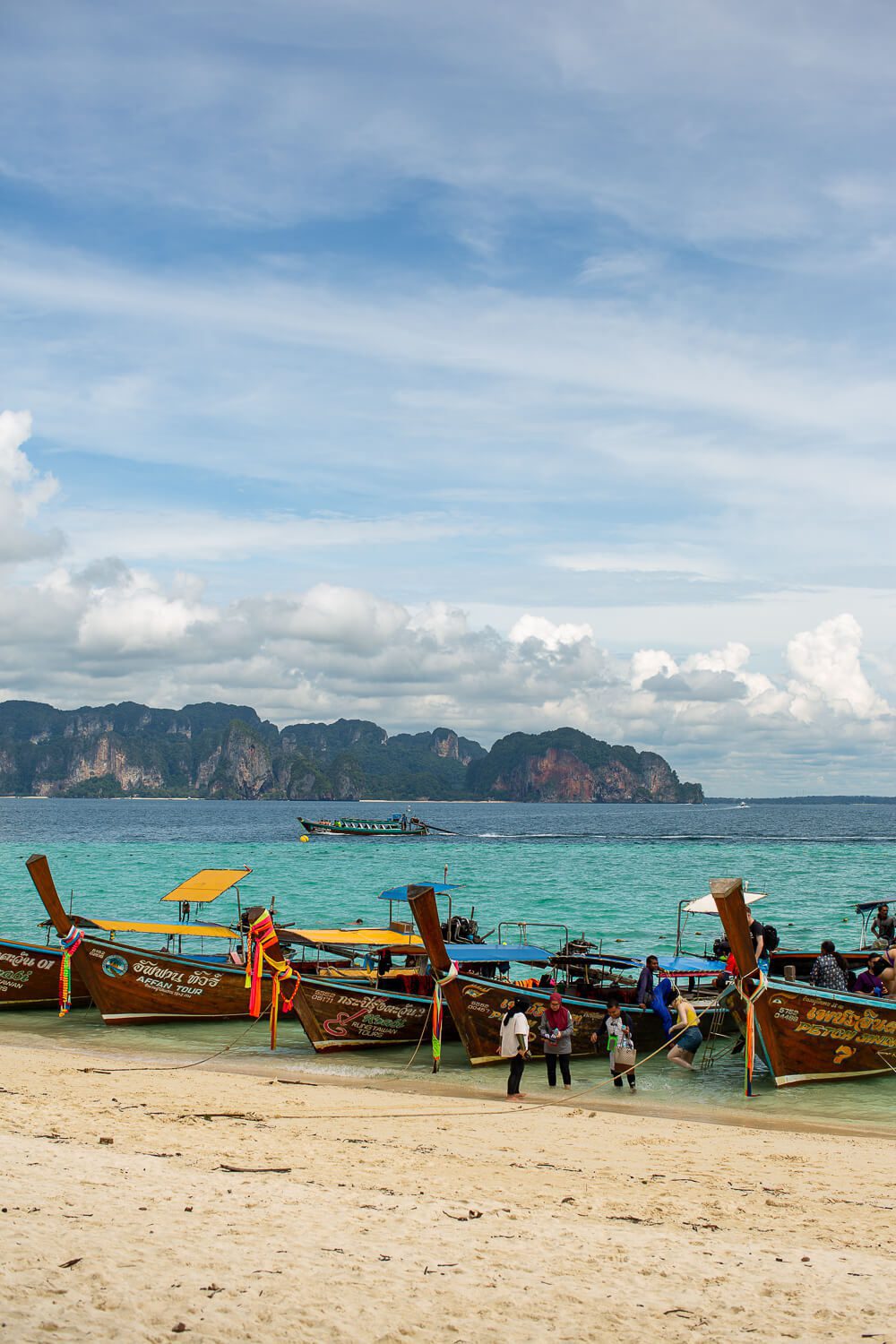
We’ve just arrived in Thailand after an amazing 30 days traveling Turkey. We flew into Phuket and taxied directly to the ferry station where we hopped on the 11 AM. ferry to the Phi Phi Islands.
This was the second time that Joe and I were visiting the islands together. We first went in 2016. Night two of super, relax mode, my guard was down as I was in my happy place and I left our ATM card in the ATM machine!
In my defense, the machine doesn’t beep if you leave your card in the machine after you use it, and you must leave the card in the machine for the duration of the transaction. Back home in the United States, most machines have you insert the card and immediately pull it out, avoiding the possibility of the machine eating your card.
Anyways, back to my inconvenient story. Ironically but not surprisingly last time we were in Thailand in 2018, I left the ATM card in a machine in Chiang Mai, Thailand and two weeks later in Vang Vieng, Laos.

Whoops. Therefore I was prepared and knew what to do. If you’re in a smaller town in Southeast Asia, the banks can retrieve your card for you. You obviously need to know what machine you left it at. Go to that ATM and take pictures of where it’s located and of the numbers on the machine.
Different banks own different machines. From here, google the bank branches and go to the physical banks. Ask them if they are the ATM operator and if they can retrieve your card for you .
In Vang Vieng, it was the last bank I tried that was able to get my card back. That was such a moment of relief! I can attest that if this happens to you in the Phi Phi Islands, that there are only two banks on the island.
If you don’t know where you lost your debit card, well that’s a different story. If for example, you have a Charles Schwab bank account, you can get your card sent to you within 2 days anywhere in the world! Now that’s a great perk.
This amazing benefit renews every year and is one of the many reasons I recommend Charles Schwab, that and being reimbursed on your foreign ATM fees. It’s a win-win.
Final Thoughts on How to Avoid Foreign Transaction Fees While Traveling
Avoiding foreign transaction fees doesn’t have to be complicated – it just takes a little preparation. From choosing a no-fee travel credit card and opening an account with global ATM rebates to steering clear of airport exchanges and dynamic currency conversion, these small steps can save you hundreds of us dollars on a trip.
Add in tools like VPNs, and even a high-yield savings account for your travel fund, and you’ll be well on your way to stretching your budget further. What are you waiting for, the world is ready for you!
If you found this article useful or have any tips to add, let fellow travelers know in the comments below 👇.
Budget & Travel Tips ↓
📍 Planning an international adventure and don’t know where to start? Check out the guides below for more budget tips and travel tips that will make traveling a breeze.
10 Tips to Survive a Long Haul Flight
35 Useful & Unique Travel Accessories
15 Things to do Before an International Trip
Enjoy this Post?!?! Pin in for Later ↓